

As students return to schools and campuses, daily food service routines start again. For food service teams, it is also a good time to look at what happens to the food after it has been served.
Plate waste in schools is an important part of the overall food waste picture. Measuring it shows how much food is left uneaten, but the data can be used for more than reporting. When plate waste is made visible to diners and followed over time by the kitchen, it can support both awareness and practical improvements in food service operations.
A total number does not tell the whole story
Knowing the total amount of plate waste is useful for the kitchen. For an individual diner, however, a daily total of several kilograms can feel quite abstract.
The small amount of food left on one plate may not seem significant either. But when similar amounts are left by hundreds of diners every day, they quickly add up.
This is why plate waste monitoring can work on two levels: providing data for food service teams while giving diners immediate feedback on the food they leave behind.
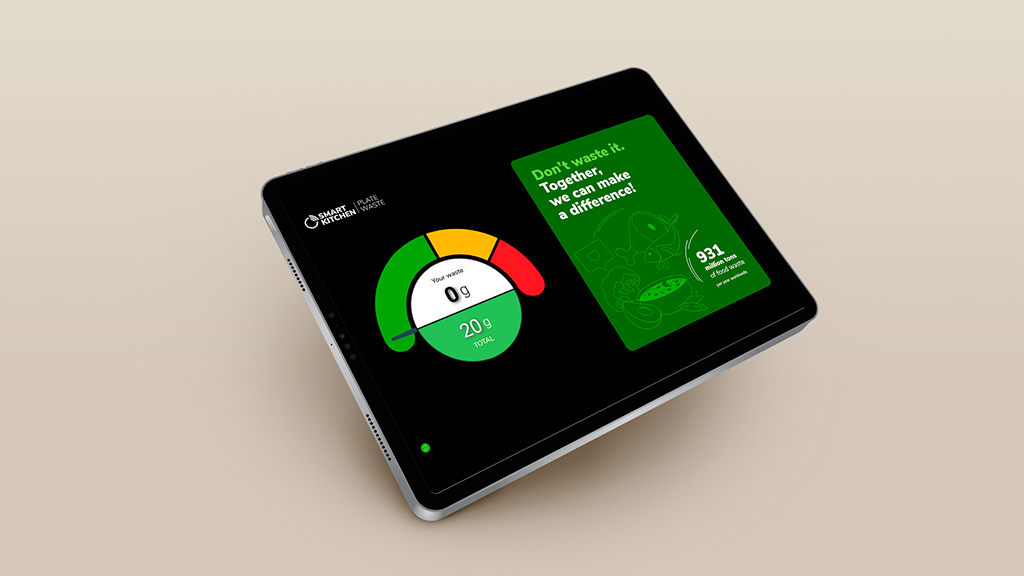
With SmartKitchen's plate waste solution, diners can see the weight of their own plate waste at the return station. The feedback is given immediately, at the point where the waste is generated.
The purpose is not to judge individual choices. It is to make an otherwise easily overlooked amount of waste visible and help diners consider their own habits. For example, could taking a smaller portion first and going back for more when needed reduce what is left on the plate?
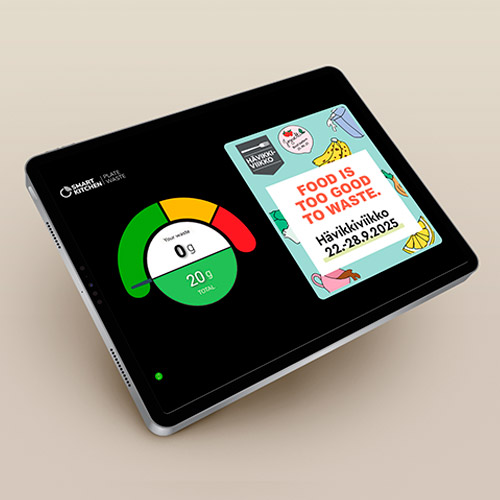
The same displays are also used to communicate information about food waste and highlight relevant themes or campaigns.
From individual feedback to a shared goal
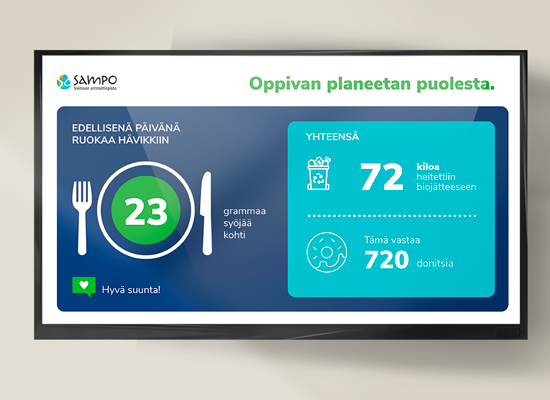
Plate waste information does not need to stay at the return station. Larger displays in the dining area can be used to communicate results to the whole school or campus community. They can show, for example, the amount of plate waste per diner, the total amount generated or changes over time.
Numbers can also be put into context with simple comparisons that make the scale of the waste easier to understand.
This creates a link between an individual action and the wider result. A diner sees their own plate waste, while the shared display shows what those individual amounts mean when combined across the whole dining community.
Making plate waste part of everyday food service
Making the results visible can help keep food waste on the agenda beyond individual campaigns. When diners regularly see the amount of plate waste being generated, reducing waste becomes a more tangible shared objective. At the same time, food service teams continue to collect data that can be followed over a longer period.
This is particularly relevant in schools and other educational environments, where food service is not only about producing and serving meals efficiently. The dining environment can also support awareness of the impact of everyday food choices.
What can plate waste data tell the food service team?
For the kitchen, the value of plate waste monitoring goes beyond a single daily figure.
Continuous monitoring makes it possible to see how plate waste develops over time and to identify changes that deserve a closer look.
Is plate waste higher on certain days? Do particular meals repeatedly result in more leftovers? Has a change in portioning, a menu adjustment or another action had an effect?
In schools and campus restaurants, it is also useful to relate waste to the number of diners. A total amount can vary simply because more or fewer people were served. Looking at plate waste per diner makes it easier to compare different days and periods.
Plate waste can have many causes, from portion sizes and menu choices to production volumes and serving practices. Monitoring does not provide every answer on its own, but it gives food service teams a better basis for identifying patterns and deciding what should be investigated or changed.
Did you know? Free school meals are not the norm across Europe
Finland, Sweden and Estonia have a long tradition of providing free school meals universally to children in compulsory education. In many other European countries, free or subsidised school meals are targeted at specific age groups, families or schools.
Regardless of how school meals are organised, plate waste monitoring can help food service teams understand how much served food is left uneaten and how this changes over time.
Seeing the wider food waste picture
Plate waste is one part of the food waste generated in professional kitchens.
SmartKitchen's food waste monitoring solution can also be used to track waste generated during food preparation and serving. Looking at waste from different stages together provides a more complete view of where food is being lost and where reduction measures can have the greatest impact.
Plate waste monitoring adds another important dimension to this: it brings diners into the picture and makes the results visible in the place where meals are actually eaten.
When measurement, operational data and clear feedback are combined, food waste monitoring becomes more than collecting kilograms. It becomes information that can support both day-to-day decisions and longer-term food waste reduction.