

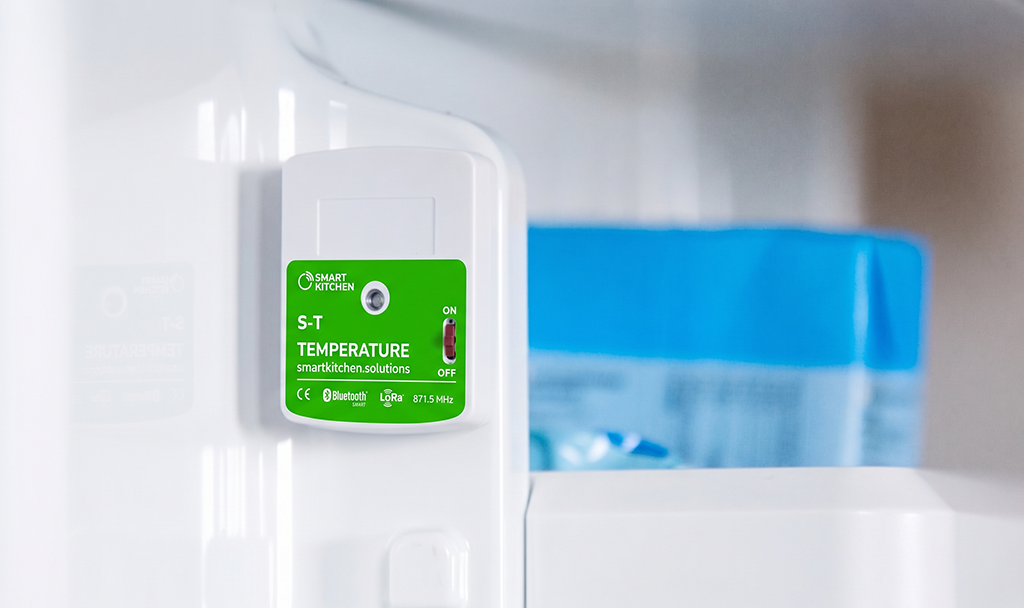
The temperature inside a refrigerator is not necessarily the same throughout. Different temperatures may be recorded on the top and bottom shelves, near the door or close to the back wall. This is why the temperature shown on a refrigerator's built-in display may differ from the reading of a separate temperature monitoring device.
The same factors affect refrigerator temperatures whether food or medicines are being stored. However, storage temperature requirements can vary depending on the products. Understanding why temperatures differ within a refrigerator, and what the measurements reveal about actual storage conditions, is therefore essential.
Why do temperatures vary inside a refrigerator?
Several factors influence the temperature inside a refrigerator, including its design, cooling system, air circulation and daily use.
Temperature variations can be caused by:
- Measurement location: Temperatures may differ near the cooling element, back wall or door.
- Door openings: Warm air entering the refrigerator can temporarily raise temperatures, particularly near the door.
- Air circulation: An overfilled refrigerator can restrict airflow and prevent even cooling.
- Cooling cycles: The compressor switching on and off causes normal temperature fluctuations.
- Newly stored products: Adding products at room temperature or warmer can temporarily affect the surrounding temperature.
A measuring device placed at a single point tracks temperature changes at that location. To understand how temperature is distributed throughout a refrigerator, temperature mapping involves taking measurements at multiple points. The World Health Organization (WHO) addresses temperature variations across cold storage equipment and storage areas in its guidance on temperature mapping.
How temperatures can vary inside a refrigerator
This SmartKitchen demonstration illustrates how temperatures can differ within a refrigerator and why the location of a temperature monitoring device matters.
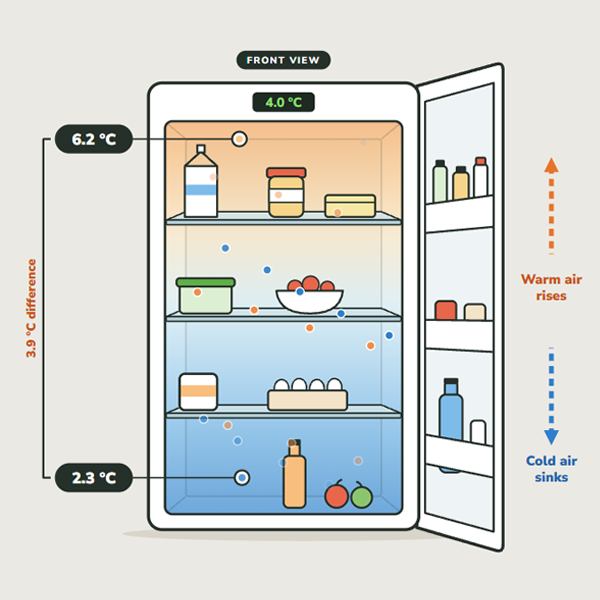
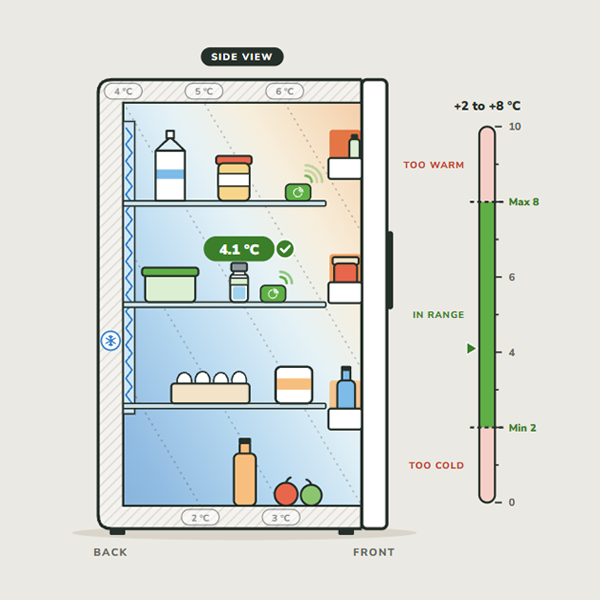
Why can a refrigerator display and a separate temperature monitoring device show different readings?
Many refrigerators have a built-in temperature display. However, the displayed temperature does not necessarily represent the conditions at the exact location where products are stored. The refrigerator's internal temperature sensor and a separate monitoring device may be positioned in different locations. In addition, the displayed reading may be based on the refrigerator's control system or an averaged temperature value.
For example, if the refrigerator display shows +4°C and a separate monitoring device reads +6°C, this does not automatically indicate a measurement error. The difference may simply be due to the measurement location. If the difference is significant or persistent, the cause should be investigated and the accuracy of the measuring devices checked if necessary.
The important thing is to understand what temperature is being measured and how accurately that measurement represents the conditions in which products are stored.
Temperature control is particularly important for medicine storage
Proper storage conditions are an essential part of medication safety. Some medicines require refrigerated storage, typically between +2°C and +8°C. However, storage requirements vary by product and must always be checked against the manufacturer's instructions and the relevant product information.
Temperatures that are too high or too low can affect the stability and effectiveness of medicines. Freezing can also damage temperature-sensitive medicinal products. This is particularly important for vaccines, some of which are sensitive to freezing.
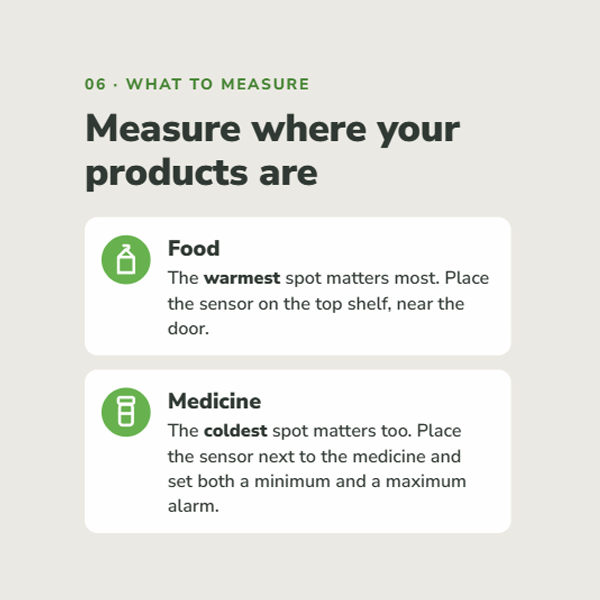
It is therefore not enough for the refrigerator display to show an acceptable temperature. Medicines and vaccines must also be stored in areas where their required storage conditions are maintained. Particular attention should be paid to areas near the back wall, where temperatures may be lower, and near the door, where temperature fluctuations may be greater.
Where should a temperature monitoring device be placed?
The most important consideration when positioning a temperature monitoring device is how well its measurements represent the actual storage conditions.
For medicine and vaccine storage, the measurement location should follow applicable guidelines and the equipment manufacturer's recommendations. Where necessary, temperature measurements can be taken at several locations to identify variations within the refrigerator.
However, a monitoring device should not be repositioned simply to reduce temperature alerts. If a measurement indicates that the temperature is too high or too low, the cause should first be investigated and the storage conditions assessed against the products' requirements.
When selecting a measurement location, consider the following:
- Where are the products stored inside the refrigerator?
- Are there areas where temperatures differ from the rest of the refrigerator?
- Do door openings or cooling cycles significantly affect temperature readings?
- Has the measurement location been selected according to the storage requirements of the products?
Continuous temperature monitoring helps identify deviations
A single temperature measurement only shows the conditions at a particular moment. It does not reveal what happened overnight or when staff were not present.
Automatic temperature monitoring continuously records measurements and creates a temperature history, allowing storage conditions to be reviewed over time. Temperature history can help identify recurring increases in temperature, assess cooling performance and determine when deviations occurred.
Automatic alerts help staff respond when temperatures fall outside the configured limits. However, an alert alone does not resolve a temperature deviation. It is also important to identify the cause, assess any potential impact on stored products and document the necessary corrective actions.
Digital temperature monitoring in care facilities
SmartKitchen’s digital self-monitoring service is used in professional kitchens, care homes and other care settings. Our customers include Folkhälsan in Finland and the City of Oslo in Norway.
SmartKitchen's monitoring devices automatically measure temperatures and store the readings in the service. When temperatures fall outside the configured limits, the system sends an alert. Temperature history is also available for later review, making it easier to investigate and document deviations.
In care environments, automatic temperature monitoring is used to monitor the storage conditions of both food and temperature-sensitive medicines. Continuous monitoring and automatic alerts reduce manual recordkeeping and help staff respond promptly to temperature deviations.
Systematic temperature monitoring and timely responses to deviations help maintain safe storage conditions while reducing the workload for staff.
Sources and further reading
- WHO: How to temperature map cold chain equipment and storage areas – Guidance on temperature mapping in cold chain equipment and storage areas.
- CDC: Vaccine Storage and Handling – Guidance on vaccine storage and handling.
- Fimea: How to store medicines? – General information on storing medicines.
- Finnish Food Authority: Controlling and monitoring temperatures is part of own-check activities – Guidance on temperature monitoring in food premises.