


A power outage can disrupt normal kitchen operations within seconds. The need to monitor critical refrigeration temperatures, however, does not disappear. In fact, reliable temperature data becomes even more important when normal operations are interrupted.
How are temperatures developing in cold rooms and freezers? Which units require attention? And once power is restored, have refrigeration systems returned to their normal operating temperatures?
When temperatures are monitored automatically and the monitoring system continues to operate during a power outage, decisions can be based on actual data rather than assumptions.
Prepare before an outage happens
A power outage may last only a few minutes or continue for several hours. For a professional kitchen, the important question is whether critical food safety monitoring remains operational throughout the disruption.
Preparing for power outages should therefore include more than procedures for refrigeration equipment and food products. It is also important to know how temperature monitoring and data transmission operate if the building loses power.
Questions to consider include:
- Does temperature monitoring continue without mains power?
- How long can the monitoring equipment operate independently?
- Can temperature data still be accessed remotely?
- How are temperature deviations handled?
- Is the measurement history retained throughout the incident?
These questions are best answered before an actual disruption occurs.
Keep cold storage doors closed
One of the simplest ways to slow down temperature increases during a power outage is to keep cold room, refrigerator and freezer doors closed as much as possible. Food safety authorities generally recommend minimising unnecessary door openings to help maintain cold temperatures during a power outage.
This is where automatic temperature monitoring provides a clear practical advantage.
There is no need to open a cold room or freezer simply to check its temperature. Instead, temperature development can be followed from the measurement data to see whether temperatures remain stable or begin to rise.
Monitoring does not remove the need to take action during an incident. It does, however, provide information that helps determine where action is required and where temperatures remain under control without unnecessary checks.
The duration of the outage does not tell the whole story
Two power outages of the same length can have very different effects on refrigerated storage.
Temperature development depends on factors such as the starting temperature, the construction and insulation of the unit, how full it is, ambient conditions and how often the doors are opened.
This is why actual temperature data provides more useful information than simply knowing when the power outage started and ended.
Continuous monitoring can show:
- when the temperature started to rise
- how quickly it changed
- how high the temperature rose
- how long the deviation lasted.
Where necessary, automatic monitoring can be complemented with manual product temperature measurements and other actions defined in the kitchen's HACCP procedures.
Monitoring continues after the power returns
Restoring electricity does not necessarily mean that the incident is over.
Refrigerators, freezers and cold rooms need to restart correctly and return to their required operating temperatures. It is important to verify that refrigeration is functioning as expected and that temperatures are returning to the correct levels.
Automatic monitoring makes this recovery visible. Instead of relying on individual spot checks, the temperature history shows when temperatures begin to fall and when normal conditions are restored.
It can also help identify a unit that does not recover as expected after the outage.
The incident leaves a useful data trail
Temperature information is valuable while an incident is happening, but the recorded history is equally useful afterwards.
Historical data provides a clear picture of how temperatures developed throughout the outage and how quickly different refrigeration units recovered once power was restored.
This supports food safety documentation and helps the organisation review the actions taken. It can also improve preparedness for future disruptions.
For example, the data can help identify:
- which cold storage units maintained their temperatures most effectively
- where temperatures increased most quickly
- how long temperature deviations lasted
- how quickly different units recovered after power was restored.
A power outage therefore leaves more than a record of when electricity was unavailable. The data can also provide useful information for improving preparedness for future incidents.
SmartKitchen temperature monitoring continues without mains power
SmartKitchen automatic temperature monitoring is designed so that temperature measurement can continue during a local power outage.
The measuring devices are battery-powered. The Mobile Gateway is the data transmission device that transfers measurement data from the devices to the SmartKitchen service. It has a battery backup with an operating time of approximately three days.
This means that automatic temperature monitoring and data transmission can continue when the normal power supply to the premises is interrupted.
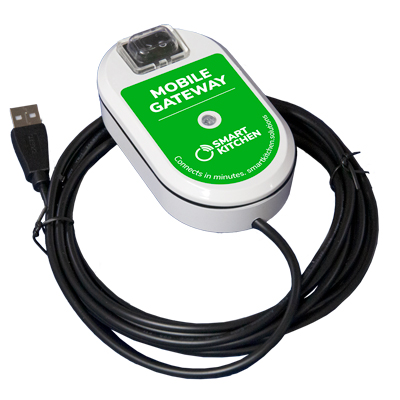
Automatic monitoring does not replace a professional kitchen's HACCP procedures or contingency plan. It provides essential data to support them when normal operating conditions are disrupted.
Would your temperature monitoring continue during a power outage?
Power outage preparedness should also include a review of the systems used for critical temperature monitoring.
Consider the following:
- Will critical temperatures continue to be measured without mains power?
- How long will the monitoring equipment continue to operate?
- Can temperature development be monitored remotely?
- Are responsibilities and actions for temperature deviations clearly defined?
- Is measurement data retained throughout the incident?
Automatic temperature monitoring reduces manual work during normal operations. During an unexpected disruption, its role becomes even more important: it provides continuous data to support timely and informed decisions.