

During the hottest weeks of summer, cold storage in commercial kitchens can be under more pressure than usual. Outdoor temperatures rise, kitchen areas may become warmer, deliveries are received in warmer conditions and staffing may vary due to holidays.
Warm weather does not automatically cause problems, but it increases the load on refrigeration equipment. This makes it important that temperature monitoring, alerts, responsibilities and agreed procedures work in practice, also when daily operations differ from normal.
Refrigeration equipment is under higher load in summer
In summer, the operating environment of refrigeration equipment changes. Cold room and freezer doors are opened frequently, deliveries can temporarily raise storage temperatures and equipment must maintain safe temperatures even when the surrounding environment is warmer than usual.
Commercial kitchens should pay particular attention to:
- monitoring the temperatures of cold rooms, freezers and other cold storage areas
- ensuring that alerts work and are routed to people who are available
- checking that doors close properly and that seals are in good condition
- checking for frost or ice build-up
- avoiding overfilling refrigeration equipment so that air can circulate properly
- receiving deliveries quickly and moving products to cold storage without delay
- handling alert situations and carrying out the necessary corrective actions
A single rise in temperature does not always mean an immediate risk. For example, opening a door or filling a cold room can temporarily raise the temperature. The key is to detect situations early and ensure that longer-lasting temperature increases are handled according to the agreed procedure.
SmartKitchen’s continuous temperature monitoring supports this in practice. If the temperature of a refrigeration unit rises outside the set limits, the information is sent quickly to the agreed people. This allows the kitchen to react in time, for example by checking the equipment, moving products to another cold storage area or taking another necessary corrective action before the temperature rise creates a greater risk. At the same time, temperature data and completed actions are stored for HACCP documentation.
Responsibilities must be clear during the holiday season
During the summer, kitchen managers, supervisors and regular staff may take holidays at different times. Kitchens may also have temporary staff or seasonal workers who are less familiar with the normal routines. In this situation, HACCP procedures should not depend on one person’s memory, routines or email inbox.
During the holiday season, it is worth checking:
- who receives temperature alerts and whether they are available
- who monitors alerts and acknowledges handled situations
- how corrective actions are carried out and recorded
- where HACCP information can be viewed
- how temporary or seasonal staff should act in an alert situation
When the procedure is clear, alerts do not wait for a person who is on holiday. This is especially important when there is more staff turnover than usual in daily kitchen operations.
Digital HACCP helps ensure that information about alerts does not stay behind one person. When alerts are routed to agreed responsible people and the situation is visible in the service, summer holiday situations can be handled quickly. Documentation supports the overall process, but the most important thing is that information reaches the right people in time and action starts at the right moment.
Visibility in the kitchen helps staff react faster
During the holiday season, practical HACCP monitoring should be as easy as possible, also for people who do not use the service every day.
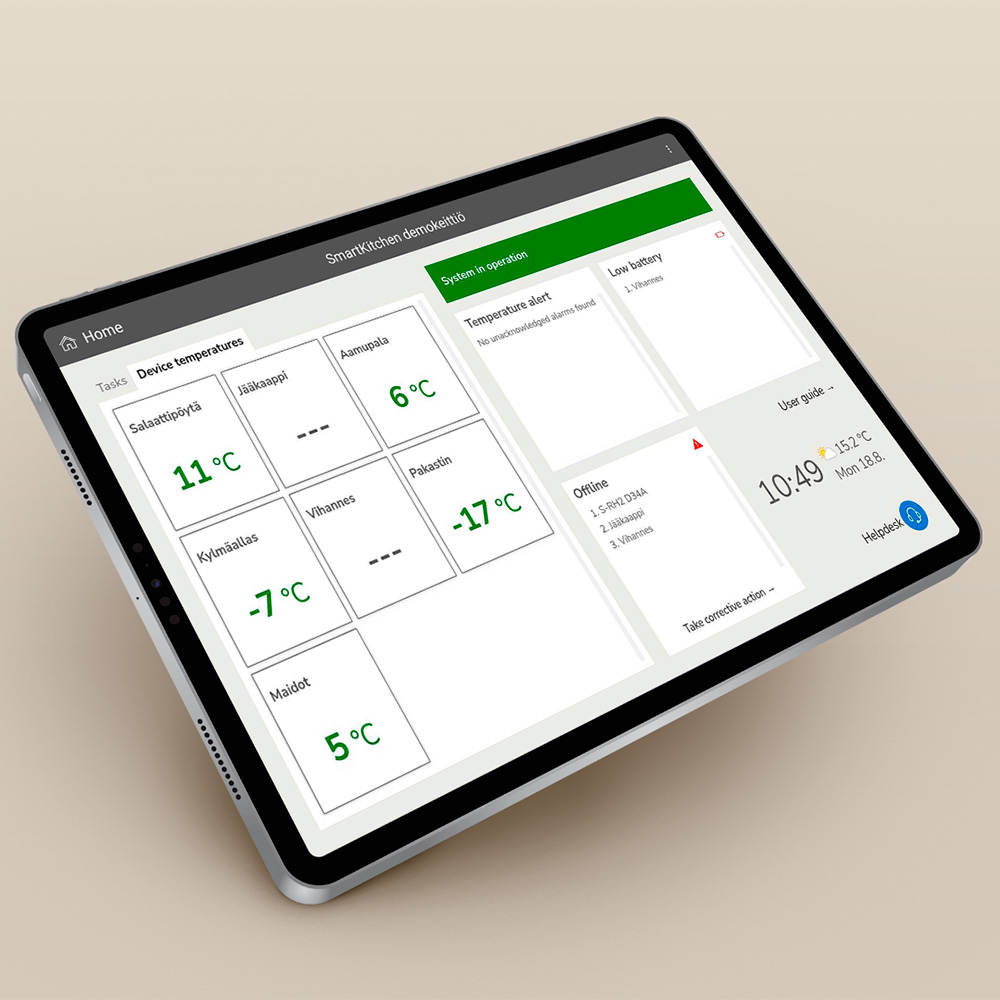
SmartKitchen Console brings key temperatures and alerts directly into the kitchen. When a temperature rises outside the set limits, the situation is clearly visible on the screen. This helps the staff on shift notice the issue quickly and take the necessary action, even if the kitchen manager or main user is on holiday.
Console does not replace agreed responsibilities, but it helps ensure that information does not stay only in email or behind one person. The situation is visible where staff can react to it in daily work.
What if the kitchen is on a summer break or temporarily closed?
Not all commercial kitchens operate as usual during the summer. Some school kitchens, educational institutions, staff restaurants or seasonal sites may be on a summer break or temporarily closed for several weeks.
A summer break does not always mean that cold storage monitoring can be forgotten. If food, raw materials or other temperature-sensitive products remain in refrigeration equipment, temperature monitoring is still important.
Before a summer break, it is worth checking:
- whether refrigeration equipment will be emptied or whether products will remain in storage
- which units will stay switched on during the break
- who will receive possible alerts during the break
- who can visit the site if the situation needs to be checked in person
- how alerts will be handled if there are no staff on site
Continuous temperature monitoring is especially useful when the kitchen is not staffed every day. If a refrigeration unit fails, the temperature rises or there is a power supply issue, the information can be received quickly without a separate on-site check. This makes it possible to react before products in cold storage are put at risk.
Summer checklist for commercial kitchens
During the hottest weeks of summer, it is useful to make a short practical check:
- Check the temperature limits and alert settings for refrigeration equipment.
- Make sure alerts are routed to people who are available during the holiday season.
- Go through with staff how to react to temperature alerts.
- Check refrigeration doors, seals, possible frost or ice build-up and general equipment condition.
- Make sure refrigeration equipment is not filled in a way that prevents proper air circulation.
- Plan monitoring during a summer break if the kitchen is temporarily closed.
The purpose of the checklist is not to add extra work, but to make sure that summer conditions have been considered in advance. When monitoring, alerts and responsibilities are agreed, daily operations remain easier to manage also during demanding weeks.
Fast reaction reduces risks and supports daily operations
The hottest weeks of summer do not change the basic principles of HACCP, but they make monitoring more important. When temperatures, alerts and responsibilities are under control, the kitchen can react to alerts in time.
SmartKitchen’s continuous temperature monitoring helps detect temperature increases in refrigeration equipment quickly and send the information to the right people. This is especially important when conditions change, staffing varies or the kitchen is temporarily closed. When information reaches the right people in time, a possible equipment failure or temperature rise can be handled before it creates a greater risk for food products or kitchen operations.
Want to know more about digital HACCP?
SmartKitchen helps commercial kitchens monitor refrigeration temperatures continuously, route alerts to the right people and react to issues in time. Read more about Digital HACCP for commercial kitchens →