

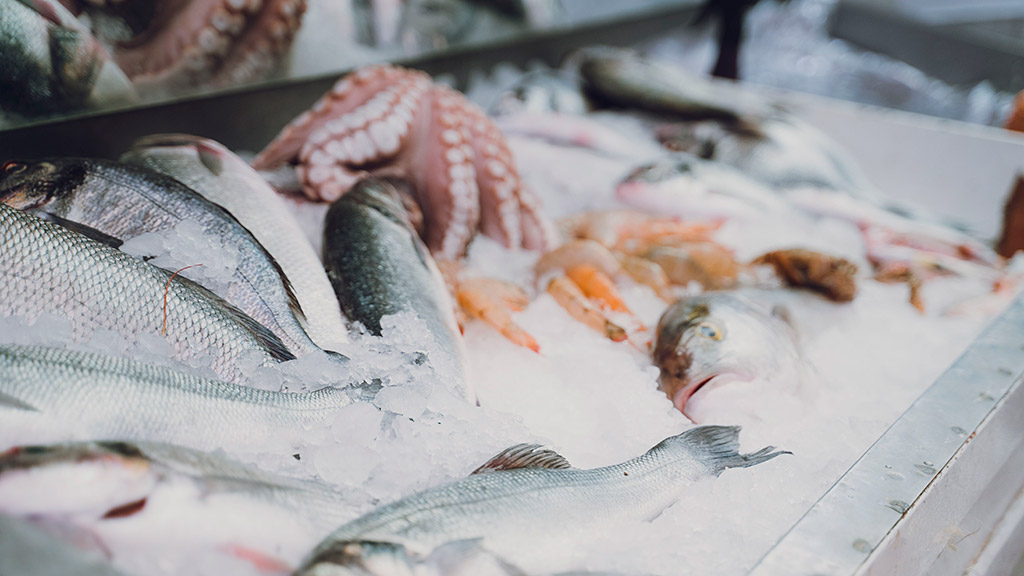
Fresh products are among the most demanding product groups in grocery retail and food service. Fish, seafood, meat, cold cuts, ready-made salads and other perishable foods are sensitive to temperature changes. Even a small deviation can affect food safety, product quality and the amount of food waste.
Customers need to trust that fresh products have been stored and handled correctly. For retailers and food service operators, this trust is built through daily HACCP routines: temperature checks, hygiene monitoring, deviation handling and reliable documentation.
The practical question is simple: how can you make sure that chilled displays, service counters and fresh products are monitored consistently, even during busy shifts, staff changes and situations where a deviation is not visible from the outside?
In chilled displays, the product matters, not only the equipment
Cold storage monitoring is not only about the temperature of the cabinet, cold room or freezer. In service counters, fish and meat displays, salad bars, cold cut cabinets and other fresh food areas, it is also important to monitor the temperature of the food product itself.
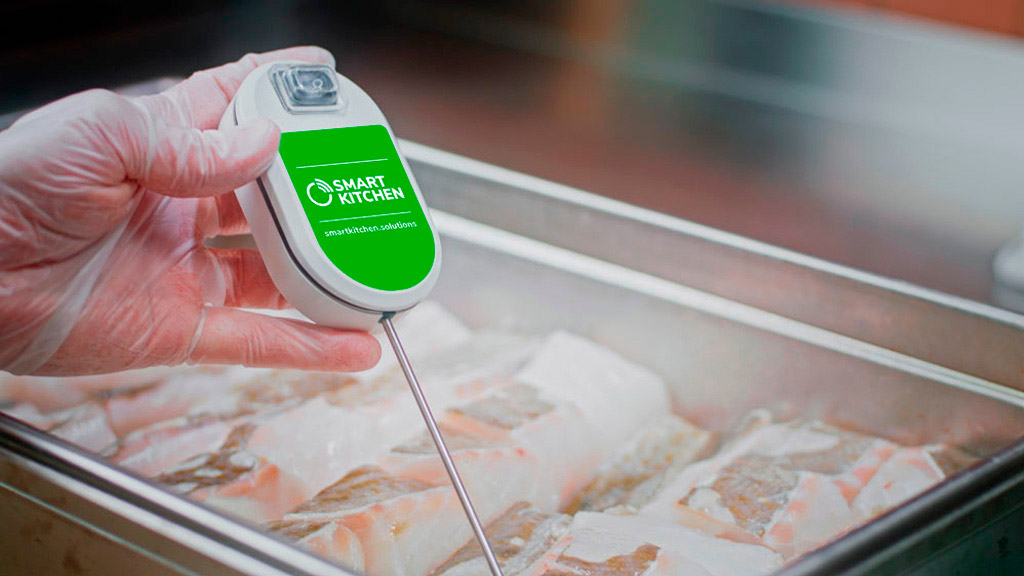
This is where product temperature checks are needed. In practice, these checks are often carried out with a probe or infrared thermometer, and the result is recorded as part of the HACCP process.
A clear monitoring routine should define:
- which products or sales areas are checked
- how often temperature checks are carried out
- what the accepted temperature limits are
- who is responsible for the checks
- how the results are recorded
- what happens if a temperature is outside the accepted range
A temperature deviation is not always visible from the product. That is why measurements, records and corrective actions need to be in place before a small issue becomes a larger risk.
Hygiene monitoring complements temperature control
Fresh food safety does not depend on temperature alone. The hygiene of surfaces, tools, preparation areas and service counters also affects how safely products can be handled and sold.
That is why hygiene checks are an important part of HACCP routines in grocery retail and food service. They help verify cleaning practices, monitor hygiene levels and show that hygiene is controlled systematically.
With digital HACCP, hygiene checks can be recorded with defined sampling points, results, responsible persons and corrective actions. This supports daily work and makes it easier to prepare for audits and inspections.
When product temperature checks, hygiene checks and deviation handling are managed in the same system, HACCP becomes a practical management tool rather than a separate documentation task.
The value of checks comes from recording and responding
Probe thermometer checks are essential in many fresh food areas. The challenge is not the measurement itself. The challenge is what happens after the measurement is made.
If results are left on paper forms, separate folders or individual notes, it can be difficult to verify that checks have been completed, deviations have been handled and corrective actions have been documented. This becomes even more important when there are multiple locations, measurement points and responsible employees.
A digital recording process helps ensure that:
- checks are completed according to the agreed routine
- results are stored in one place
- deviations can be acknowledged and commented on
- corrective actions are documented
- reports are available for audits and internal follow-up
This supports both day-to-day store operations and chain-level quality management.
Automatic monitoring supports continuous condition control
Not every cold storage area should rely only on individual checks. Cold rooms, freezers and other areas that require continuous condition monitoring can benefit from automatic temperature monitoring.
Automatic sensors monitor temperatures continuously and can send alerts when limits are exceeded. This helps detect deviations outside normal working hours or between manual checks.
Early detection can reduce both food safety risks and food waste. At the same time, continuous temperature history supports HACCP documentation and makes deviations easier to review afterwards.
In grocery retail and food service, the most effective approach is often a combination of:
- product temperature checks for chilled displays and service counters
- hygiene checks for surfaces, tools and preparation areas
- automatic temperature monitoring for cold rooms, freezers and other areas requiring continuous control
- deviation comments and corrective actions recorded in the same system
This gives a more complete view of product safety, storage conditions and hygiene.
SmartKitchen brings HACCP data into one system
SmartKitchen digital HACCP helps grocery retailers and food service operators monitor temperatures, record hygiene checks, handle deviations and keep HACCP documentation up to date.
The system supports both daily HACCP routines and management-level visibility across different sites. When all records are managed in the same system, individual checks become part of a clear overview of HACCP performance.
The solution can include:
- product temperature checks with a probe or infrared thermometer
- defined measurement points for chilled displays, service counters and fresh food areas
- hygiene check recording
- deviation acknowledgement and comments
- corrective action documentation
- tasks and responsible persons
- automatic temperature sensors for cold rooms and freezers
- a mobile data transfer device for automatic measurements
- reports for audits and internal monitoring
- a centralised view across multiple locations
Reliable data supports safety and operational decisions
Good HACCP practice makes deviations manageable. A temperature deviation or a poor hygiene result does not automatically mean that the process has failed. What matters is whether the deviation is detected, recorded and handled correctly.
When product temperature checks, hygiene checks, automatic monitoring and corrective actions are managed in one system, HACCP records are easier to keep up to date. This reduces manual work, improves traceability and helps demonstrate that critical food safety controls are monitored systematically.
The data also supports better operational decisions. If deviations repeat at a specific measurement point or similar issues appear across several locations, the information helps target corrective actions where they are needed most.
Learn more about SmartKitchen HACCP products and licences, or contact us to discuss how cold storage and hygiene monitoring could be implemented in your location or across your organisation.