

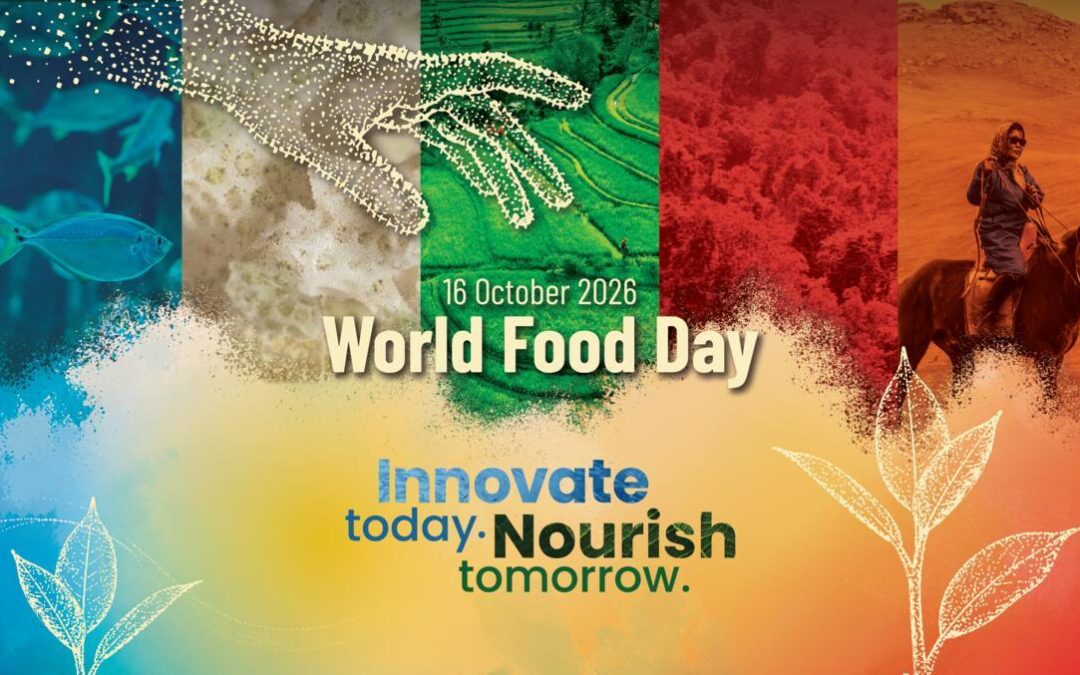
World Food Day is celebrated on 16 October. This year's theme, Innovate today. Nourish tomorrow., highlights the importance of innovation in building more sustainable, resilient and inclusive food systems.
The Food and Agriculture Organization of the United Nations (FAO) emphasises that innovation is not limited to new technologies. It also includes practical knowledge, improved processes and new ways of working together.
For professional kitchens, this is a particularly relevant message. Innovation does not always require major investments or entirely new systems. Sometimes, meaningful improvements begin with a better understanding of daily operations and a willingness to do things differently.
Innovation is not just about technology
When we talk about innovation in food systems, the conversation often focuses on new production methods, advanced technologies and large-scale solutions. These developments are important. But innovation also happens in restaurant kitchens, school cafeterias, hotels and other food service operations every day.
It can mean adjusting production quantities based on actual demand, improving food storage practices, finding better ways to use ingredients or simplifying daily routines. Many of these improvements build on the professional knowledge and experience that kitchen teams already have.
Technology can support these decisions by making information easier to collect, analyse and use. Its value, however, depends on how that information is translated into practical action.
Better information supports better decisions
Professional kitchens make countless decisions every day. How much food should be prepared? Which dishes are most popular? Where does food waste occur? Are storage conditions being maintained as required?
Answering these questions becomes easier when decisions are supported by reliable information rather than assumptions alone.
For example, measuring food waste helps kitchens identify where losses occur and which changes could make the greatest difference. Comparing results over time makes it possible to evaluate whether adjustments to purchasing, preparation or serving practices are working.
Similarly, automatic temperature monitoring supports food safety by providing continuous information about storage conditions and alerting staff when temperatures fall outside the set limits.
These are practical examples of how digital tools can support established kitchen processes without replacing professional judgement.
The goal is not simply to collect more data. It is to make relevant information available so that kitchen teams can act on it.
Small improvements can become lasting practices
Innovation does not need to happen all at once. A kitchen might begin by measuring food waste in one part of its operations. The results may reveal opportunities to adjust portion sizes or production planning. Once the results have been evaluated, successful practices can be adopted elsewhere.
What matters is that improvements become part of everyday routines rather than remaining one-off initiatives. This is particularly important in larger food service organisations, where consistent practices and comparable information can help individual kitchens learn from one another.
Successful innovation often combines three things:
practical experience, reliable information and a clear process for putting improvements into practice.
Building a better food future, one kitchen at a time
World Food Day reminds us that the future of food depends on decisions made throughout the food system, from production and distribution to preparation and consumption.
Professional kitchens are one part of that system. By using ingredients efficiently, maintaining safe storage conditions and continuously improving their operations, they can contribute to more responsible use of food and resources.
At SmartKitchen, we support this work through digital solutions for food waste tracking and food safety self-monitoring. Our aim is to help kitchen professionals access reliable information, reduce manual work and make informed decisions in their daily operations.
Innovation becomes valuable when it leads to meaningful improvements. And often, those improvements begin with everyday decisions.
Learn more about World Food Day 2026 on FAO's official website →
About World Food Day
World Food Day is celebrated annually on 16 October to mark the founding of the Food and Agriculture Organization of the United Nations (FAO) in 1945.
The 2026 theme, Innovate today. Nourish tomorrow., highlights the role of innovation, knowledge and cooperation in developing food systems that can provide safe and nutritious food while protecting resources for future generations.